Toyota forklift model numbers, and how to buy the right machine
Toyota is the forklift badge most buyers ask for by name, and deciding you want one is the easy part. The hard part is reading the Toyota forklift model numbers on the plate, so you know exactly which machine you are being offered before you pay for it.
This page is the decoding guide. It reads the model code, the two digit prefix in front of it, the serial and the series, and it says plainly where a Toyota is worth the extra money and where it is not. We source Toyota forklifts to order and ship them worldwide, so once you know what you want, tell us and we go and find it.
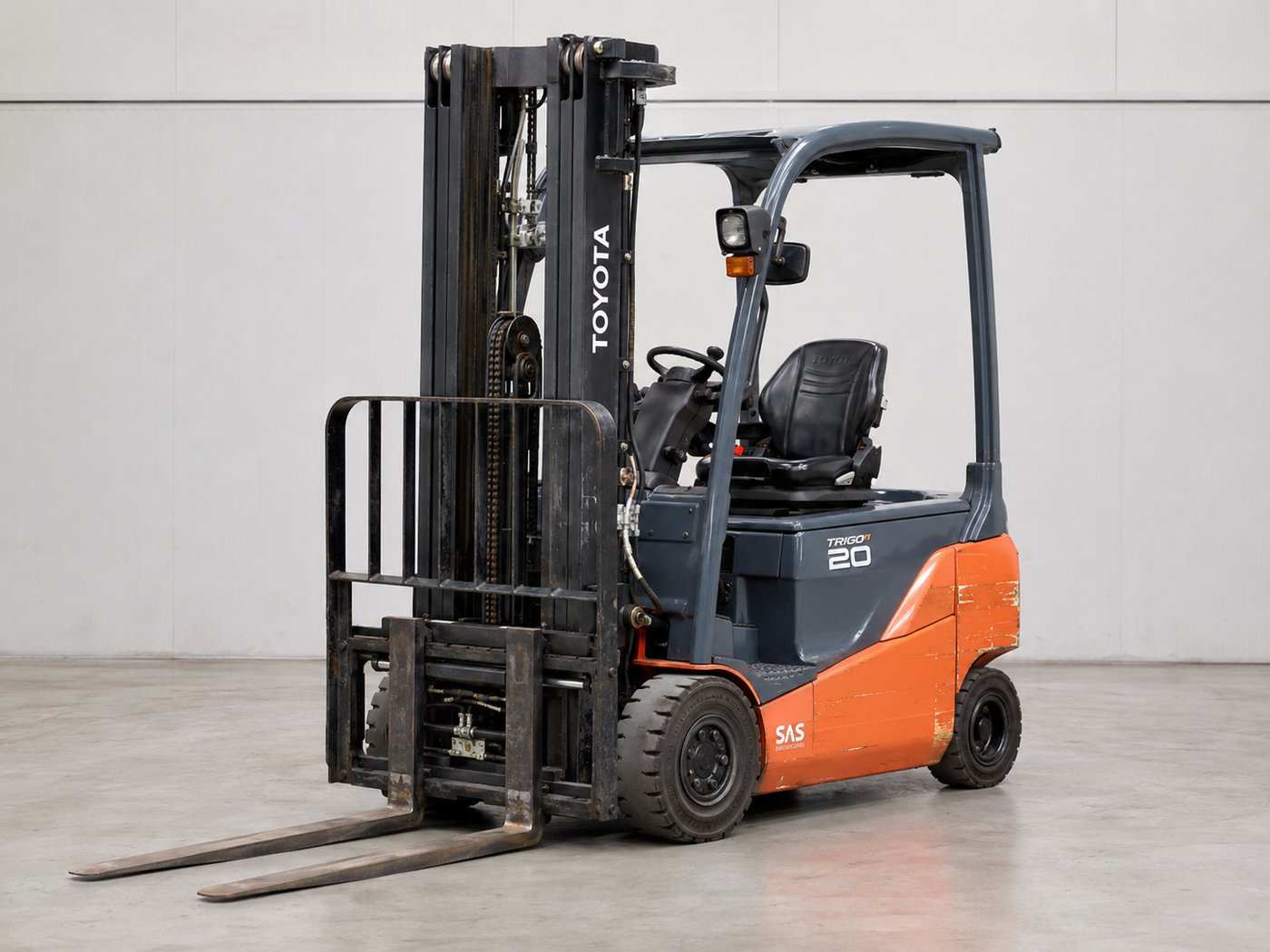
What a Toyota forklift looks like
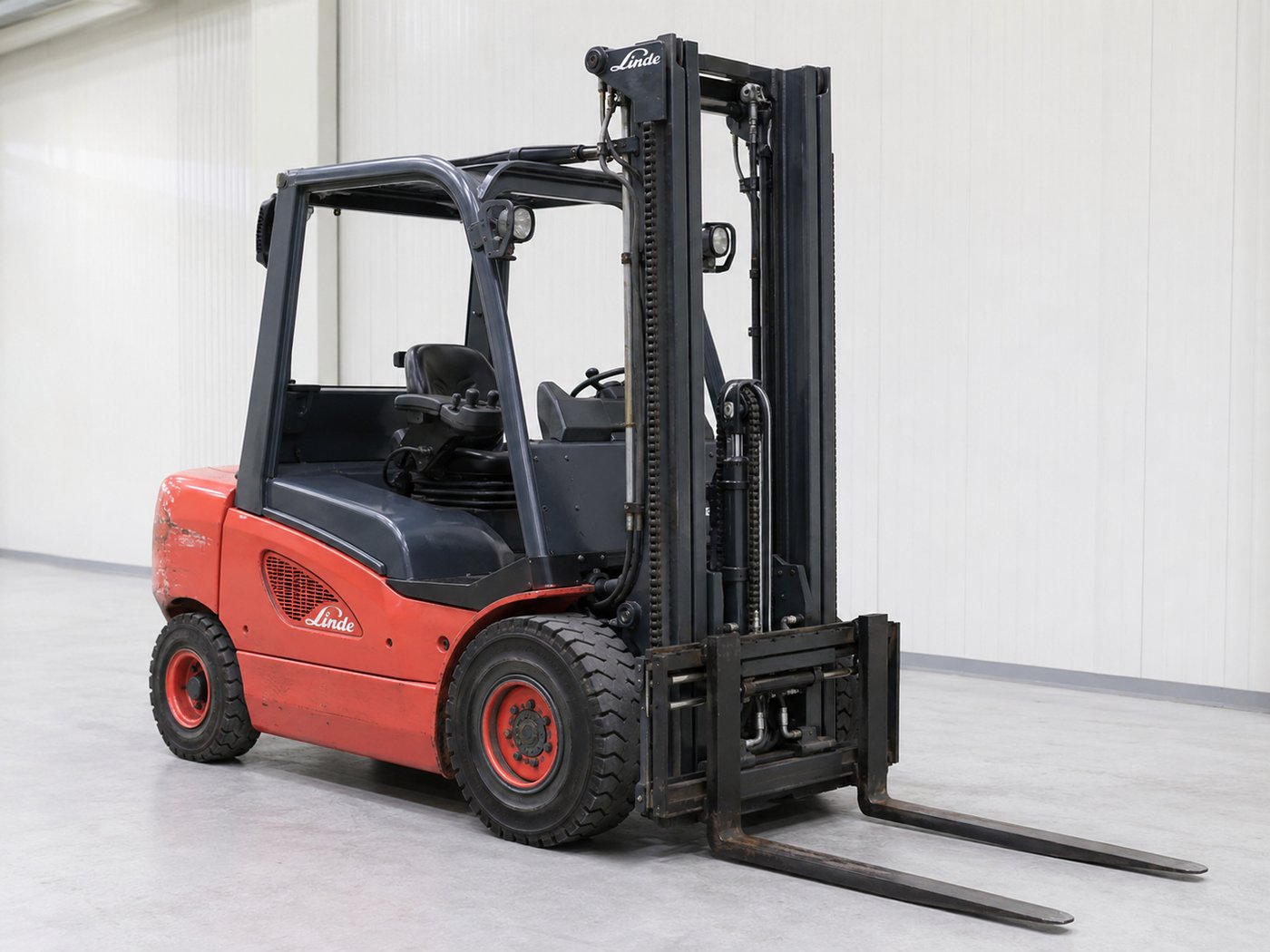
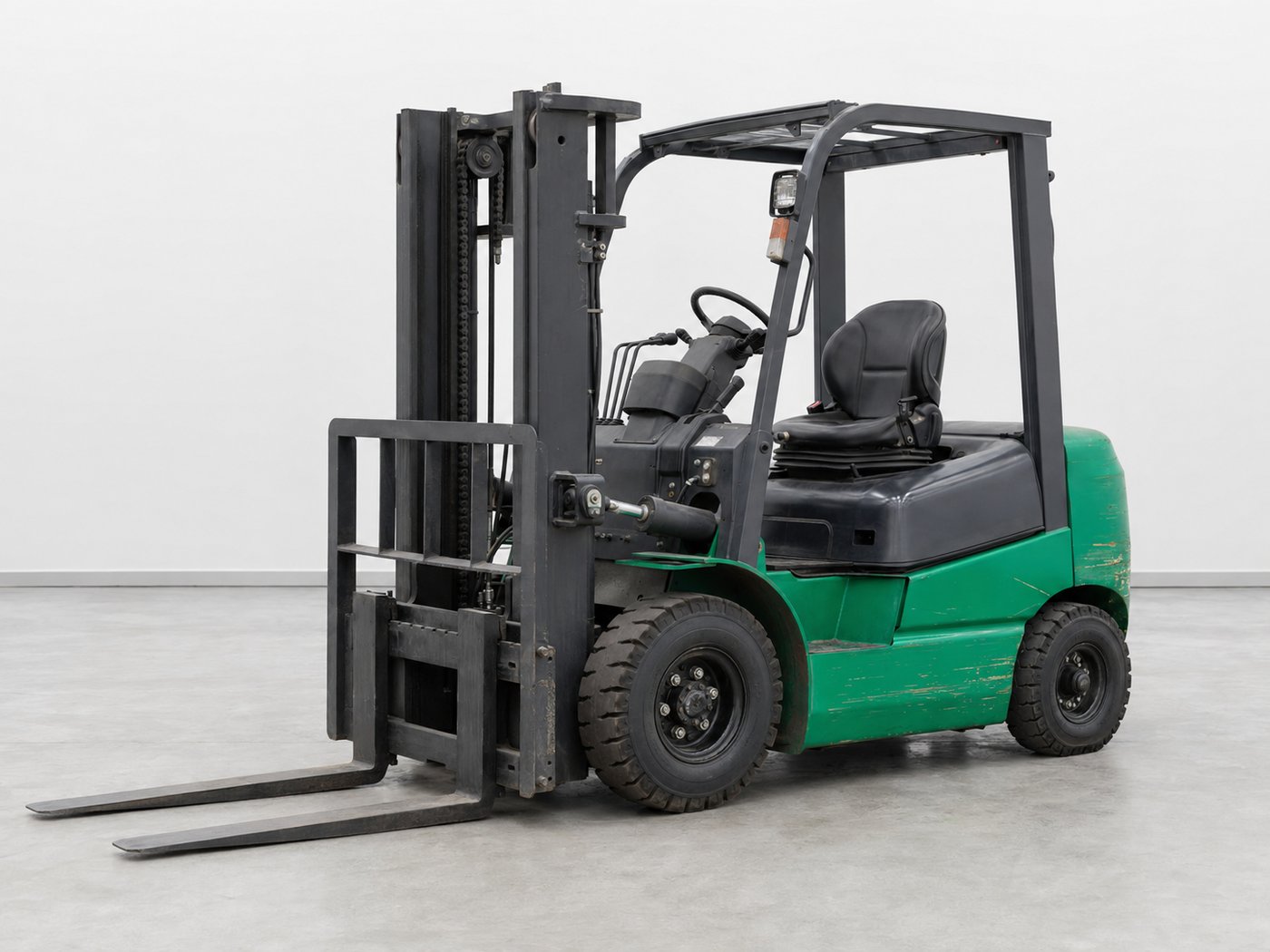
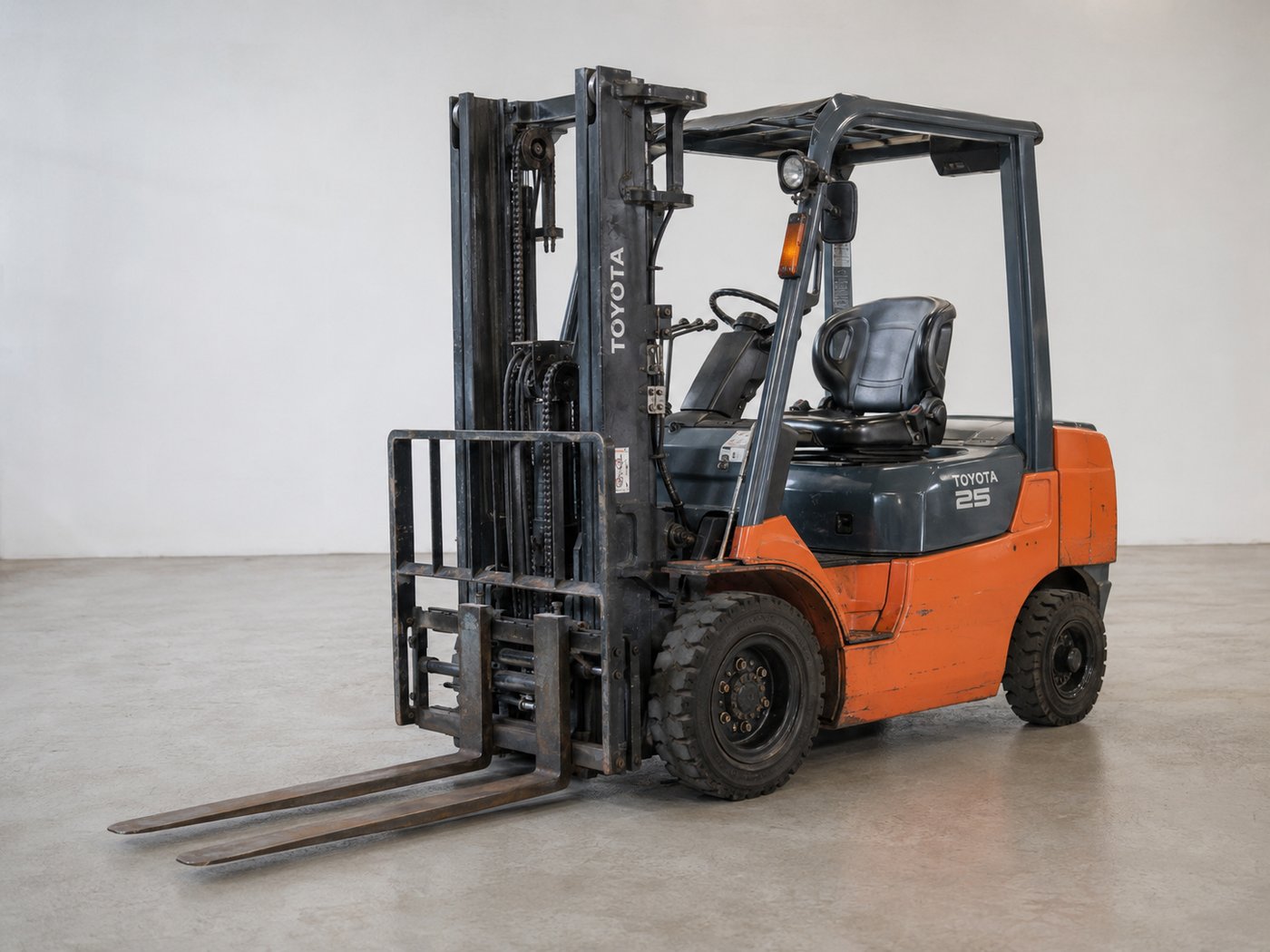
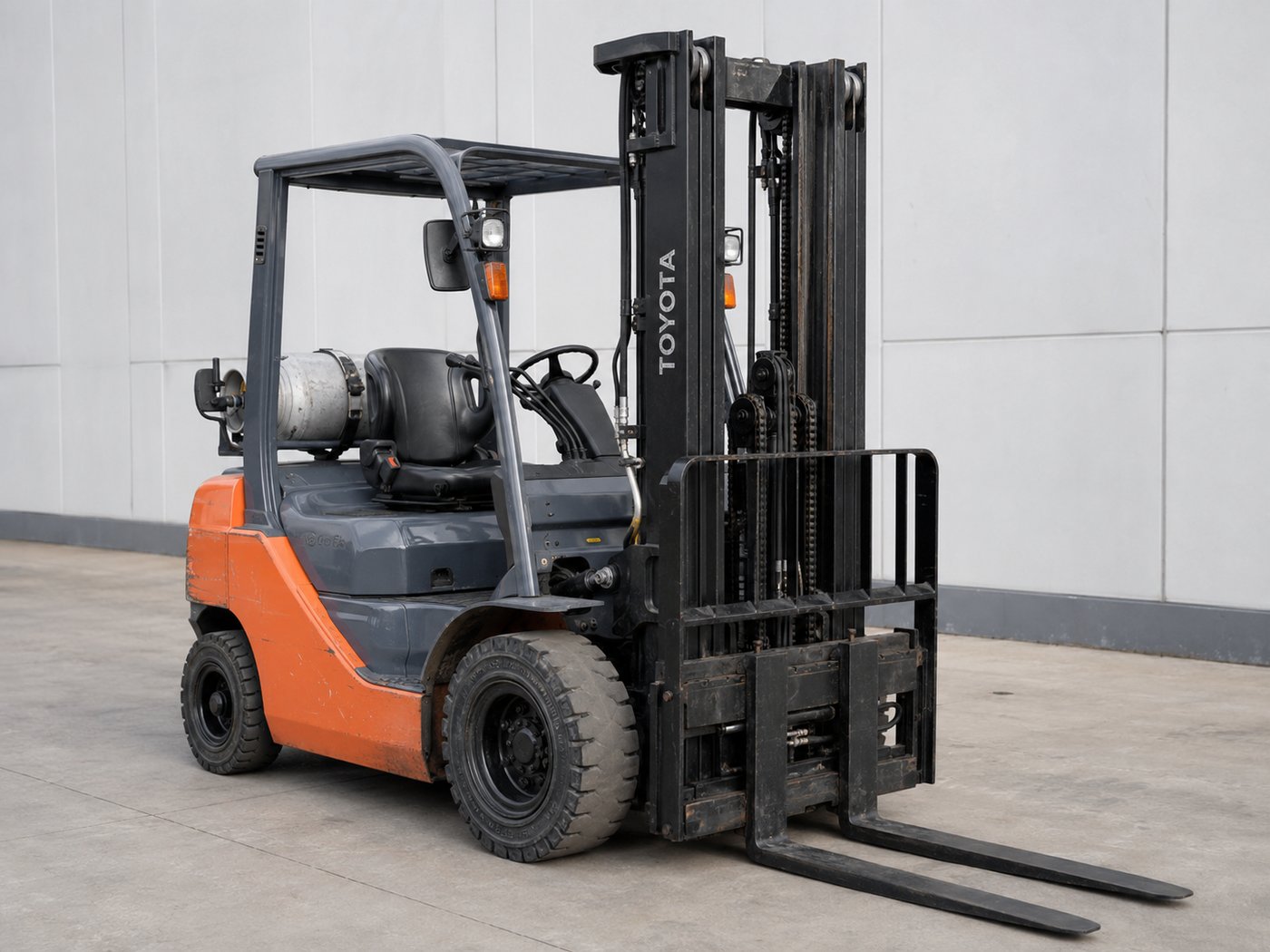
These show the type of machine we source in this brand. They are not photos of a unit we are holding. When we find your machine you get real photos of that exact one.
Are Toyota forklifts worth the premium?
Usually yes, if the machine works most days. Toyota Industries says it has been the number one company in material handling worldwide since 2001, and that scale is the real product. It is why parts move, why a mechanic in most countries has seen one before, and why a used Toyota still sells well when you are finished with it.
What you are buying is a long working life and a soft landing at the end of it. A Toyota that has been serviced tends to keep lifting past the point where a cheaper truck would be worrying you, and when you sell it on you get a bigger share of your money back than a value brand returns.
Now the part a dealer will not put on their own brand page. You pay the premium twice. Once when you buy, and again every time you buy a part, because genuine Toyota parts through a dealer sit well above the Chinese equivalent for the same job. On a truck that lifts twice a week, that is money you will never earn back.
So buy the Toyota if the forklift runs most days, if one day of downtime costs you more than the price gap, or if you want the machine that is easiest to sell on later. If the work is light or seasonal, look at a Chinese brand instead and keep the difference. Our guide to the best forklift brands puts the whole field side by side.
How to read a Toyota forklift model number
Read a Toyota model number from the left. The first digit is the series, F means forklift, the next letter is the fuel, any letters after that describe the tyres and where it was built, and the last digits are the base capacity. So 8FD25 is an 8 series diesel forklift with a 2.5 tonne base rating.
| Part of the code | What it means | Example |
|---|---|---|
| First digit | The series, which is the generation of the truck | 8 in 8FD25 |
| F | Forklift | 8FD25 |
| G | Petrol, LPG, or both on a dual fuel truck | 8FG25 |
| D | Diesel | 8FD25 |
| B | Battery electric | 8FBE20 |
| E | Three wheel electric, or an end control rider | 8FBE20 |
| C in the tyre position | Cushion tyres. No C means pneumatic tyres | 8FGCU25 |
| U | Built in the United States | 8FGCU25 |
| Last digits | Base capacity, carrying one decimal place | 25 means 2.5 |
The capacity digits are the ones that catch importers out, because the unit changes with the market. On a metric truck 25 means 2,500 kg, and Toyota list the 8FD25 as a 2.5 tonne machine. On a United States built truck the same 25 means 5,000 lb, which is nearer 2,270 kg. Ask which one you are being offered before you agree anything.
Then there is the two digit prefix you see on export and Japanese market trucks, such as 62-8FD25. It looks like a capacity and it is not. It describes the engine and the drive.
| Prefix | Engine | Drive |
|---|---|---|
| 30- | 4Y petrol | Manual transmission |
| 32- | 4Y petrol | Torque converter |
| 60- | 1DZ-II diesel | Manual transmission |
| 62- | 1DZ-II diesel | Torque converter |
| 70- | 2Z diesel | Manual transmission |
| 72- | 2Z diesel | Torque converter |
That prefix mapping comes from dealer decoder tables and not from a public Toyota document, and later 8 series builds moved to the 1DZ-III engine, so treat it as a guide and confirm the engine stamped on the block before you order a single part. Toyota make the same point about capacity on their own decoder page, that the data plate is the authority. Our forklift model number decoder does this same job for Komatsu, Linde, Hyster and the Chinese brands.
How to work out the year of a Toyota forklift
You cannot get the year out of a Toyota serial number with one digit or one rule. Toyota combines the model and the build sequence into a single number, so the only reliable method is matching your serial against the production chart for that exact model. A Toyota dealer can do it, and so can we if you send us the plate.
Start by finding the plate. Toyota say the model and serial live on the data plate, which is fixed to the truck and usually sits around the dash or on the side of the chassis. On many machines the serial is also stamped into the frame. If the plate and the frame do not agree, stop there and ask why before you go any further.
Then send three photographs to whoever is checking it for you. The whole data plate with every line readable, the hour meter with the key turned on, and the frame stamping. That is enough for a dealer to place the machine in a production year, and it is enough for us to tell you whether the year in the advert is honest.
Our forklift serial number year lookup takes this brand by brand. If you are buying a machine you cannot stand next to, read buying a forklift overseas safely before you send anyone money.
Toyota 8 series vs 7 series: what actually changed
The 7 series brought the safety electronics and the 8 series brought cleaner engines and far better fault finding. Toyota introduced its System of Active Stability in 1999, when the 7 series was the current range, and it is standard equipment on the 8 series. At similar hours and similar money, take the 8 series.
System of Active Stability watches the truck while it works. When it senses a sideways tip risk it locks the rear axle, so the stability footprint changes from a triangle into a rectangle, and it can limit forward tilt and rear tilt speed with the mast up. Operator Presence Sensing sits alongside it and cuts the drive and the hydraulic functions when the seat switch opens, so the truck cannot creep away with nobody on it.
The 8 series then added the things you feel in ownership rather than in the brochure. Emissions dropped, which matters if the truck comes indoors. The engine is monitored properly instead of at a handful of points, so a fault code tells your mechanic where to look. Travel speed can be set electronically, where the 7 series needed a mechanical speed limiter that cost real money to fit.
Here is the trade you are making. More electronics means more that can fail, and it means the truck needs somebody who can read the codes. The classic one is the seat switch. It wears out, or the wire under the seat breaks, Operator Presence Sensing does exactly what it was designed to do, and the truck will not drive. It looks like a dead forklift and it is a cheap part. In a country with no Toyota dealer, the gap between a cheap part and a dead machine is the whole argument for buying from someone who checks these things first.
Diesel, LPG or electric: which Toyota suits your work
Diesel for outdoor yards and rough ground, petrol or LPG for work that moves between inside and outside, electric for indoor work on a good floor where fumes and noise are a problem. Toyota builds all three in the same 8 series family, and the letter in the model code tells you which one you are being offered before you ever see the machine.
| Fuel | Toyota code | Typical capacity we source | Where it suits |
|---|---|---|---|
| Diesel | 8FD | 1.5 to 3.5 tonnes, heavier on request | Yards, timber, containers, rough ground |
| Petrol or LPG | 8FG | 1.5 to 3 tonnes | Work that moves between indoors and outdoors |
| Battery electric | 8FB, and 8FBE on three wheels | 1.5 to 3 tonnes | Indoors, smooth floors, quiet running |
Those capacities are typical of what we can source, not a fixed catalogue. Every one of them is a base rating, taken at a 500 mm load centre on metric trucks and at 24 inches on United States built ones, and the real figure drops as soon as you fit a tall mast or an attachment. Confirm the number on the data plate of the machine you are actually offered.
On an electric Toyota the battery is a second purchase hiding inside the first. Ask for the battery's own date, a recent capacity test, and the charger details against your mains supply, because a tired battery on a sound truck can cost you a large share of what you paid for the whole machine. If you are still weighing the three fuels up, read diesel, electric or LPG, and forklift engines explained covers what is actually under the bonnet.
What high hours really mean on a Toyota
A well kept Toyota usually keeps working past the point where a cheaper truck would worry you, and that is exactly why sellers ask strong money for high hour Toyotas. The badge buys you a longer life. It does not buy a free pass, and it does not undo neglect.
A forklift on one normal shift covers roughly 2,000 hours a year. Under 5,000 hours is low and has plenty of life left. Five to ten thousand is the ordinary used range, where the service history matters more than the number itself. Past ten thousand you stop reading the meter and start reading the machine, and on a Toyota that can still be a fair buy if the price reflects it. How many hours is too many goes through this properly.
Two warnings apply hardest to this brand. Hire fleet machines are common in the used export market, and a hire truck is usually tidy in the paint and tired underneath, so the body tells you nothing about the hours. And an hour meter can be swapped. Compare the reading against the wear on the pedal rubbers, the seat and the steering wheel. If a truck reads 4,000 hours and the pedals are worn through, the meter is not the truth.
What to check before you buy a used Toyota
Check the plate against the machine first, then the mast, chains, forks, tyres and hydraulics, then the electronics. On an 8 series, insist somebody sits on it and drives it while you watch, because the safety systems only show themselves when the truck is working.
- Plate and frame: the model and serial on the data plate match the frame stamping and the paperwork.
- Hour meter: photographed with the key on, and the wear on the pedals and the seat agrees with the reading.
- Mast and chains: lifts smooth to full height, holds without drifting down, chains even and not slack.
- Forks: no cracks at the heel, heels not thinned, both forks the same.
- Fault codes: on an 8 series, ask for a photo of the display with the key on, and a video of a cold start.
- Seat switch: engine running, the driver stands up, drive and hydraulics should cut. If they do not, the switch has been bypassed.
- Electric only: the battery date, a recent capacity test, and the charger voltage against your supply.
The full list for any brand sits in our used forklift buying checklist. If the code on the machine in front of you does not look like anything above, the model number decoder covers the other brands.
What we source and where we ship it
We do not sit on a yard full of Toyotas. You tell us the capacity, the fuel, the mast height and the port you want it landed at, we go and find the machine, and we send you real photos of that actual unit with its hours and its data plate before you commit to anything. Then you get one landed price to your port.
In Toyota we can normally source diesel counterbalance trucks from 1.5 to 3.5 tonnes, petrol and LPG trucks from 1.5 to 3 tonnes, and electric counterbalance trucks from 1.5 to 3 tonnes including the three wheel 8FBE shape. Heavier diesel machines from 3.5 tonnes upward take longer to find, and we will say so plainly when you ask rather than promising a date we cannot keep.
If the truck has to work inside a shipping container, say so at the start, because that is a mast decision and not a capacity decision. Tell us the closed mast height you can live with and whether you need full free lift, and read the container spec forklift guide first so we are speaking the same language. On what it costs to get the machine to you on top of its price, forklift shipping cost worldwide and shipping a forklift in a container explain the freight side.
And if a Toyota turns out to be more truck than your work needs, we will tell you that too, and point you at Komatsu, Linde or Hangcha instead. Everything we deal in is listed on the forklifts for sale page.
The Toyota machines we source
Tell us which of these fits your work, or just tell us your loads and your site and we will point you at the right one.
- 1.5 to 3.5 ton diesel counterbalance
- 1.5 to 3 ton petrol or LPG counterbalance
- 1.5 to 3 ton electric counterbalance, three wheel or four wheel
- 3.5 ton and heavier diesel for yard and container work, on request
What we check before it ships
Whatever brand you buy, this is the list we work through on the machine we source for you, and we photograph every one of them.
- Hours on the meter We photograph the reading so you see the real number, not a claim.
- Mast and chains Lifts smoothly, chains even and within wear limits.
- Forks No cracks, heels not worn thin, both forks matched.
- Tyres Tread left and any cracking, photographed straight.
- Engine or battery Starts and runs clean, no leaks. Battery health tested on electric.
- Hydraulics Lifts and holds without a slow drop.
- Cab and controls Seat, gauges and levers, shown exactly as they are.
- Data plate and serial So you can check the year and the exact machine yourself.
Toyota forklifts: common questions
What does 8FD25 mean on a Toyota forklift?
It is an 8 series Toyota forklift with a diesel engine and a base capacity of 2.5 tonnes. The 8 is the series, F is forklift, D is diesel, and 25 is the capacity carrying one decimal place. Toyota say the same on their own decoder page and add the caveat we repeat here, that the data plate is the authority on capacity.
What year is my Toyota forklift?
There is no universal year digit in a Toyota serial number. The model and the build sequence are combined into one number, so the year comes from matching your serial against the production chart for that exact model. Send us a clear photo of the data plate and we will help you place it.
What does the 62 in 62-8FD25 mean?
Not the capacity. The two digit prefix describes the engine and drive build, and dealer decoder tables read 62 as a 1DZ-II diesel with torque converter drive. Later builds of the same model moved to the 1DZ-III engine, so confirm the engine on the machine itself before you order parts.
Are Toyota forklifts worth the extra money?
On a truck that works most days, usually yes, because it lasts longer, parts are easier to find and it sells on for more. On a truck that lifts twice a week the premium is hard to earn back, and a value brand will do that job for less.
Is a Toyota forklift with 10,000 hours too old?
Not on its own. Ten thousand hours is ordinary used range for a Toyota that has been serviced. Judge it on the mast, the hydraulics, the service history and the price, not on the number by itself.
Can you find a specific Toyota model for me?
Yes. Tell us the model if you know it, or just the capacity, the fuel and the mast height if you do not, along with your nearest port. We source to order, so we go and find the machine, send you photos of that actual unit, and quote it landed.