PremiumJapanSourced to order

Are Komatsu forklifts good? An honest look before you buy

Built inJapan. Komatsu Ltd was founded in 1921 and is headquartered in Tokyo
Known forHeavy, plain diesel trucks that come out of a construction equipment business
Model codesFD diesel, FG petrol and LPG, FB battery electric, number is capacity in hundreds of kg
World rankSeventh on the 2013 lift truck supplier list, thirteenth on the 2024 one, absent from 2025
Watch out forForklift dealer coverage, which is thinner than the Komatsu construction network
Best forOutdoor yard, timber and port work, and heavy capacities above 5 tonnes

Are Komatsu forklifts good? Yes, for the work they were built for, and the reason has very little to do with the forklift business. Komatsu is a construction and mining company that also builds lift trucks, and the machines come out heavy, simple and mechanically conservative.

That is an advantage in a yard and a disadvantage in a warehouse. This page covers what the model code tells you, which engine is actually fitted, where the parts come from, and why you see fewer new Komatsu forklifts than you used to. We source to order and ship worldwide, so tell us what you need and we go and find it.

Are Komatsu forklifts any good?

Yes, on outdoor diesel work. Komatsu Ltd was founded in 1921 and its business is construction and mining equipment, with forklifts as a smaller line alongside. Komatsu says its lift trucks combine its long history of engineering construction equipment with features meant to cut operator fatigue, and that is a fair description of how one drives.

What you get is a heavy truck with a thick chassis, plain hydraulics and a torque converter transmission a mechanic can work on without a laptop. Frames and masts tend to still be straight after a hard life.

Here is the part owners do not tell you. Forklifts are not what Komatsu is measured on. On the Modern Materials Handling ranking of the top lift truck suppliers, Komatsu sat seventh for four years running up to the 2013 list, thirteenth on the 2024 list, and does not appear on the 2025 list at all. So expect fewer machines in circulation than Toyota, thin forklift dealer coverage outside Japan and North America, and a used market where fewer buyers know what one is worth.

Straight answer. Buy a Komatsu for outdoor yard, timber and port work, especially at 5 tonnes and above, and especially where Komatsu excavators are already common. Do not buy one if you want a warehouse electric or the quickest parts counter in your city. For that, buy Toyota, or compare the field in our guide to the best forklift brands.

Komatsu FG, FD and FB model numbers explained

A Komatsu model number is two letters for the power source, a number for capacity in hundreds of kilogrammes, one or more letters for the build, and a dash number for the design series. So FD30T-16 is a nominal 3,000 kg diesel truck of the T build, in the sixteenth design series of that model.

FForklift
DDiesel. A G here is petrol or LPG, a B is battery electric
30Capacity in hundreds of kg, so a nominal 3,000 kg. Read the table below before you trust it
TThe transmission build. T is read as the torque converter build and C as the clutch build, meaning a manual gearbox. Komatsu shop manuals cover the C, H and T builds together and we could not source a Komatsu key for the letters, so confirm the build with the dealer
-16Design series, the generation of that model. It is not the year

The dash is the part people skip and then regret. Parts indexes carry Komatsu dash numbers running from single digits into the high teens, and two trucks badged FD15 a decade apart share a model number and very little else, because the engine, the hydraulics and the wiring all moved between series. The letters before the dash, such as S, H, D, L, N and E, mark build variants, and no published Komatsu key for them could be sourced, so they cannot be read off a photograph. Ask for the whole number as printed.

Now the trap that costs importers money. The capacity digits are nominal, and the published rating depends on which market's sheet you are reading and at what load centre. These figures are as published on North American spec sheet listings for these models.

ModelPublished ratingLoad centre on that sheetFuel
FG20ST-163,990 lb16.93 inLPG
FG25T-165,000 lb17.90 inLPG
FG30HT-166,001 lb19.10 inPetrol
FD30T-166,001 lb19.10 inDiesel
FD70T-815,432 lb, which is exactly 7,000 kg23.63 inDiesel
FD100-822,046 lb, which is exactly 10,000 kg23.63 inDiesel
FD160E-835,274 lb, which is exactly 16,000 kg23.63 inDiesel

Read the top of that table again. A metric truck is normally rated at a 500 mm load centre, which is 19.7 inches, so an FG25 published at 5,000 lb over 17.9 inches is less truck than a metric 2,500 kg machine, not the same one in different units. At the heavy end the badge goes back to honest metric, and an FD100 really is 10,000 kg. Ask which market's sheet you are being quoted from, and confirm on the data plate.

Our forklift model number decoder does the same job for Toyota, Linde, Hyster and the Chinese brands, and the forklift serial number year lookup covers the year, which the dash number will not give you.
Komatsu vs Toyota: which one lasts longer in hard use?

Nobody publishes a durability comparison of the two that survives checking, and anyone who quotes you one is selling one of them. What you can check is who supports the machine near you, which engine is in it, and what it is worth when you sell it.

What you can checkKomatsuToyota
The parent businessConstruction and mining first, forklifts a smaller lineMaterial handling is the core business
World lift truck rank7th on the 2013 list, 13th on the 2024 list, off the 2025 listToyota Industries has held first place, and says it has led worldwide since 2001
Engine on a 3 tonne dieselYanmar 4D94LE on the FD30T-16 sheetToyota's own 1DZ and 2Z diesel families
Dealer you are most likely to findA Komatsu construction dealer, which may not carry forklift partsA material handling dealer that carries forklift parts
ResaleThinner used market, slower to sell, harder to priceThe strongest resale in the market

On a 2 to 3 tonne truck doing ordinary work, buy the Toyota if you can get one at a sensible number, because everything about owning it is easier. The Komatsu argument gets stronger as the machine gets heavier and as you get further from a material handling dealer. A Komatsu is also worth less second hand, so run it out and the gap you paid less is money you keep, but sell it on in three years and that gap works against you. How many hours is too many covers the rest.

The engine, and the shared parts advantage

This is the most useful thing on the page and almost nobody writes it down. Komatsu forklift engines split cleanly in two. Under about 3.5 tonnes you are not buying a Komatsu engine at all. From 7 tonnes upward you are buying the same engine Komatsu fits to its excavators and wheel loaders.

ModelEngine on the published sheetMake named on that sheetPower
FG20ST-16K21 petrol and LPGNissan56 hp
FG25T-16K21 petrol and LPGGCT56 hp
FG30HT-16K25 petrolNissan60 hp
FD30T-164D94LE dieselYanmar65 hp
FD70T-8S6D102E dieselKomatsu103 hp
FD100-8SAA6D107E-1 dieselKomatsu164 hp
FD160E-8SAA6D107E-1 dieselKomatsu164 hp

Now look at where the last three engines also live. The same published spec sets give the Komatsu PC200-6 excavator an S6D102E, and the PC200-8 excavator and the WA250-6 wheel loader an SAA6D107E-1. Those are the engines in the FD70, FD100 and FD160 forklifts. Across much of Africa, South Asia and the Gulf the Komatsu machines on the ground are excavators and loaders, so filters, injectors, water pumps and gasket sets for a PC200 class machine are ordinary stock and every serious workshop has opened one. A heavy Komatsu forklift runs on that shelf.

Do not stretch this further than it goes. It applies to the heavy diesel trucks, not to the 2 to 3.5 tonne machines most buyers want, which carry a Yanmar or a Nissan unit instead. And an engine is only part of a forklift. Mast rollers, chains, rams, the transmission and the hydraulics all come down the forklift parts channel, which is thinner than Toyota's in most countries. Get the parts route confirmed in writing first.

The smaller trucks are in a decent position too, just a different one. The Komatsu 4D92E, 4D94LE and 4D98E numbers cross reference to the Yanmar 4TNE family in parts catalogues, and the K21 and K25 turn up across several forklift brands, so an ordinary petrol shop can work on them. Notice that two makes are named against the same K21 above, GCT on one sheet and Nissan on another. That is why you photograph the engine plate rather than trust a listing, and why forklift engines explained is worth reading first.

Why you see fewer new Komatsu forklifts now

Because forklifts are not the business Komatsu is judged on, and the company has stopped publishing what the lift truck side is worth. That is a reporting decision rather than a factory closing, but it has changed how visible the brand is.

The trail is easy to follow. Komatsu held seventh place on the Modern Materials Handling list of the world's top lift truck suppliers for four years running up to the 2013 list. By the 2024 list it had fallen to thirteenth, ranked against a figure it had supplied back in 2021 because a current one was not available. On the 2025 list it was dropped altogether, because it did not answer the questionnaire and does not break out lift truck revenue.

Read that carefully, because it is easy to get wrong. A ranking dropped a company. The company did not drop the product. Komatsu still lists forklifts as a current line on its own product pages, and has built them in China through Komatsu Forklift Manufacturing (China), set up in 2004, as well as in Japan.

What it means for you is practical. Fewer new Komatsu lift trucks reach most markets than fifteen years ago, so the used pool is smaller and older, the forklift dealer near you is less likely to exist, and a Komatsu takes longer to sell on. That does not make it a bad machine. It makes it one you check on first.

The one question to ask. Message your nearest Komatsu dealer and ask whether they stock forklift parts or only construction parts. In most countries those are two different shelves and sometimes two different companies, and the answer changes what a Komatsu is worth to you more than anything on the machine does.

Komatsu capacities for yard, port and outdoor work

The range that reaches export markets runs from about 1.5 tonnes up to 16 tonnes, and Komatsu is strongest in the top half of it. The small trucks are ordinary. The 7 to 16 tonne diesels are where the brand earns its reputation, because that is where the construction engineering shows.

FamilyNominal capacityFuelWhere it suits
FG15 to FG181.5 to 1.8 tonnesPetrol or LPGLight work moving between inside and outside
FD20 to FD35, FG20 to FG352 to 3.5 tonnesDiesel, petrol or LPGGeneral yard work, loading bays, warehouse doors
FD40 to FD50, FG40 to FG504 to 5 tonnesMostly dieselTimber, steel, block, heavy pallets, rough ground
FD707 tonnesDieselHeavy yard work and light port work
FD100 to FD16010 to 16 tonnesDieselPorts, container yards, plant and quarry work
FB15 to FB321.5 to 3.2 tonnesBattery electricIndoors on a good floor, and not Komatsu's strongest suit

Every figure there is nominal, and each one drops the moment you fit a tall mast or an attachment, so treat the table as typical and confirm on the data plate. Above 5 tonnes the truck also changes shape, with a wider chassis, dual front tyres on many builds and a transport weight that decides how it ships, which our Hyster page covers. If it has to work inside a container, say so at the start, because that is a mast question, and the container spec forklift guide has the numbers.

What to check before you buy a used Komatsu

Check the plates first, then the transmission, then the wear items. You are buying a machine you cannot stand next to, so photographs and video have to do the work your hands would normally do, and the plates are what stop a seller guessing at the specification.

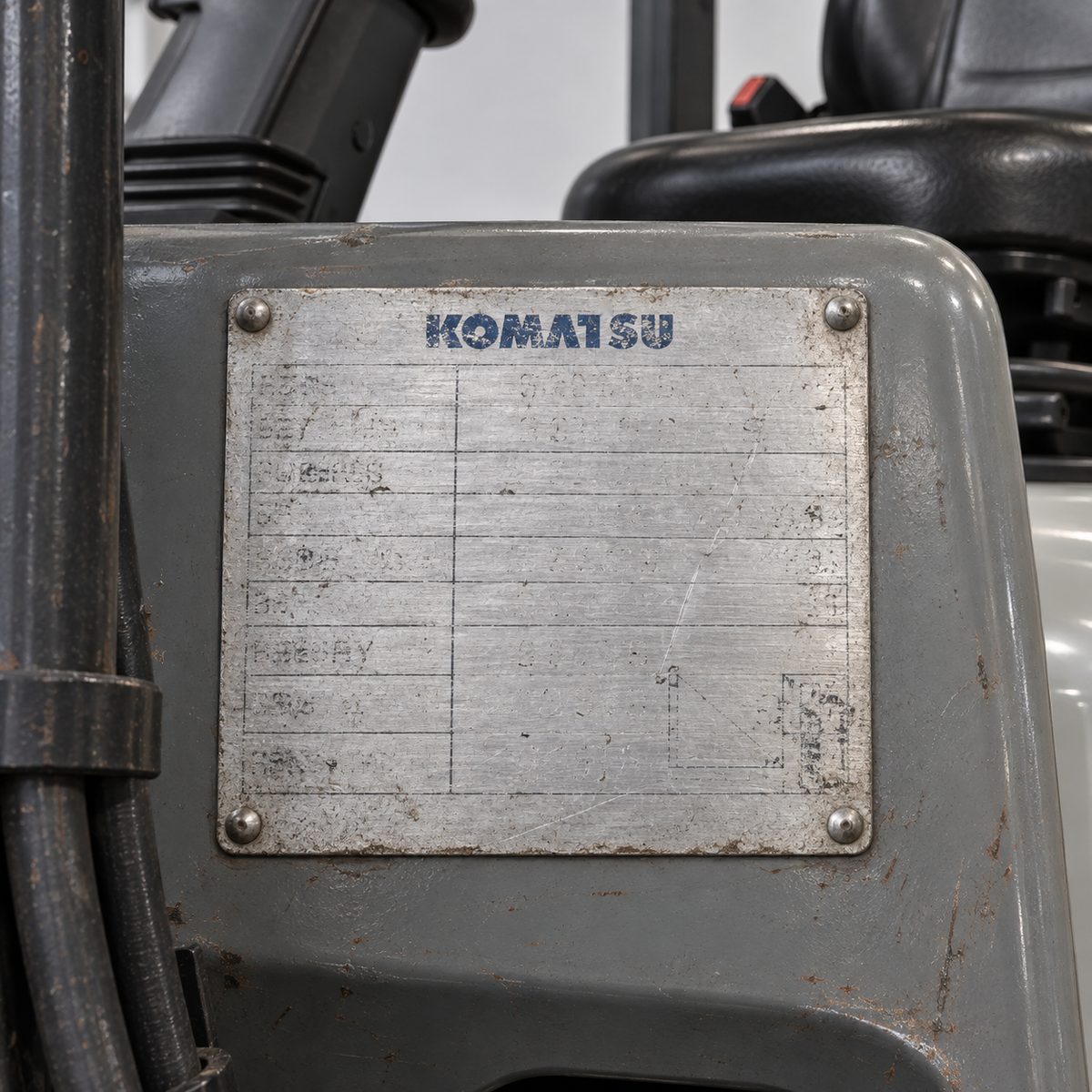
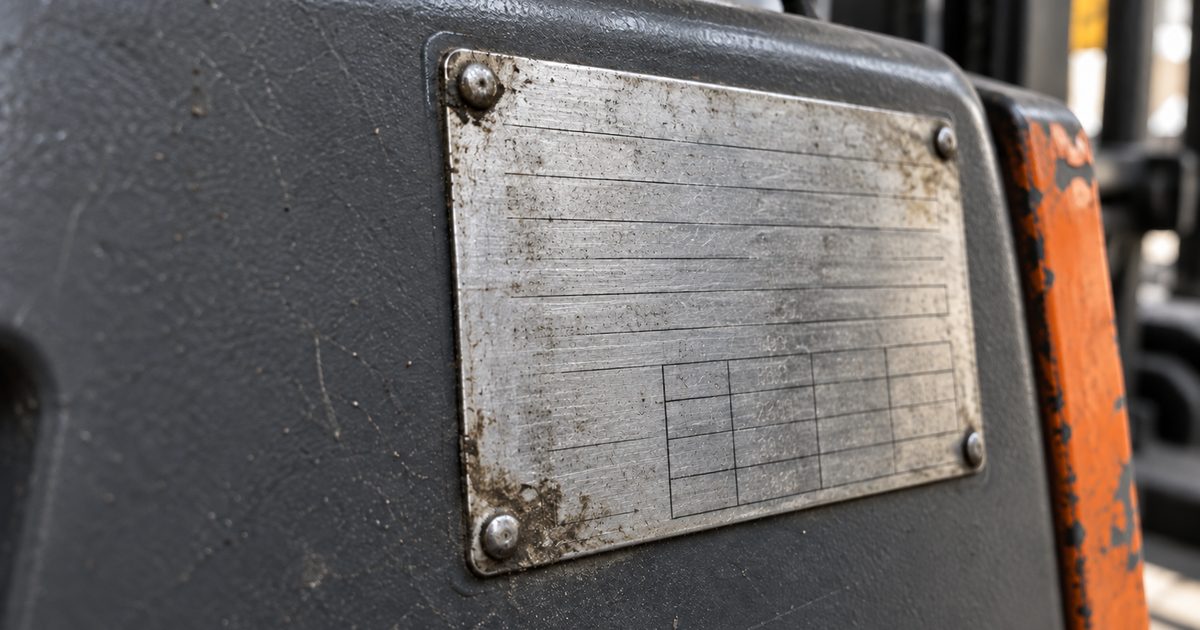
  • The data plate: full model number with its dash, serial, rated capacity, load centre and mast height. The counterweight badge is not the truth, the plate is.
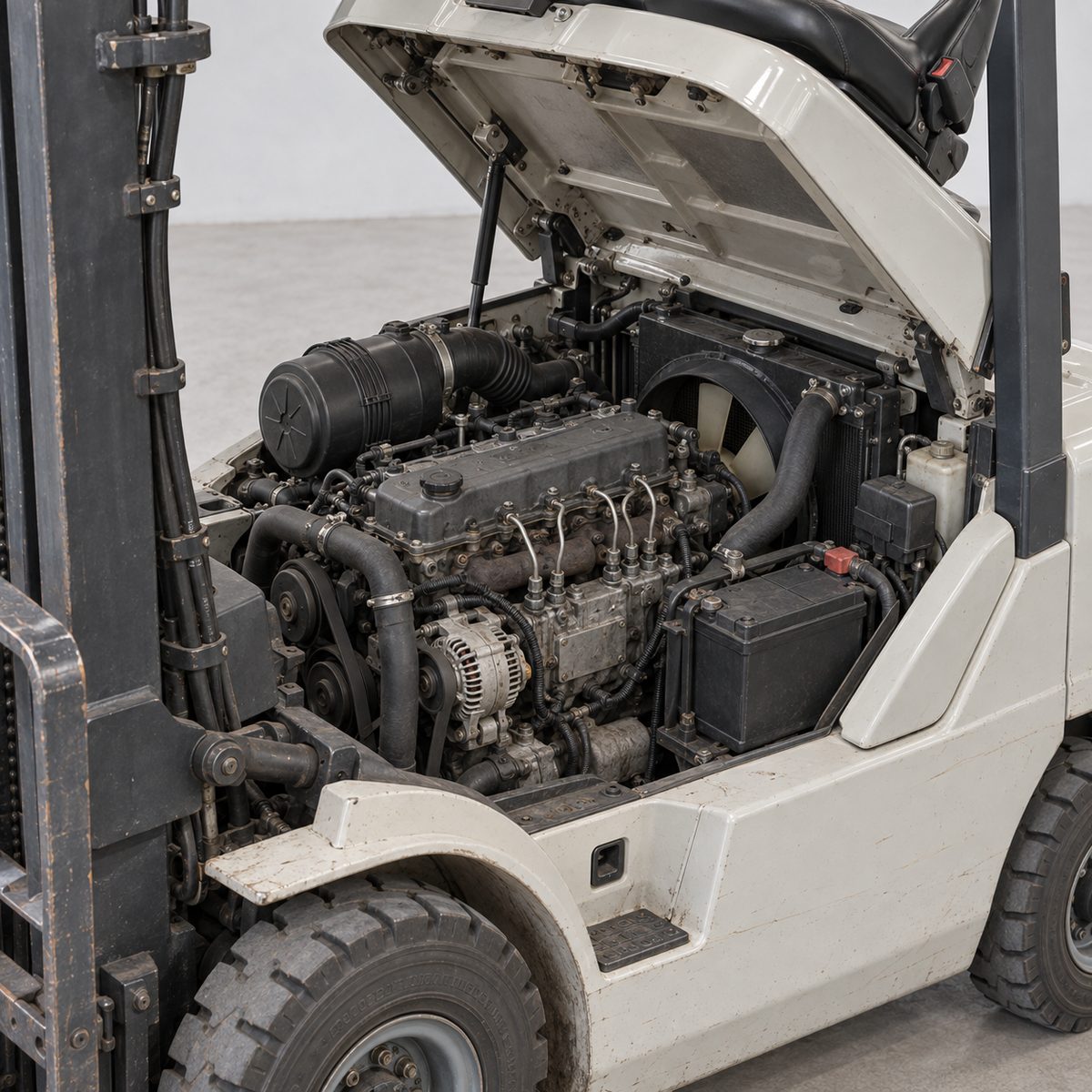
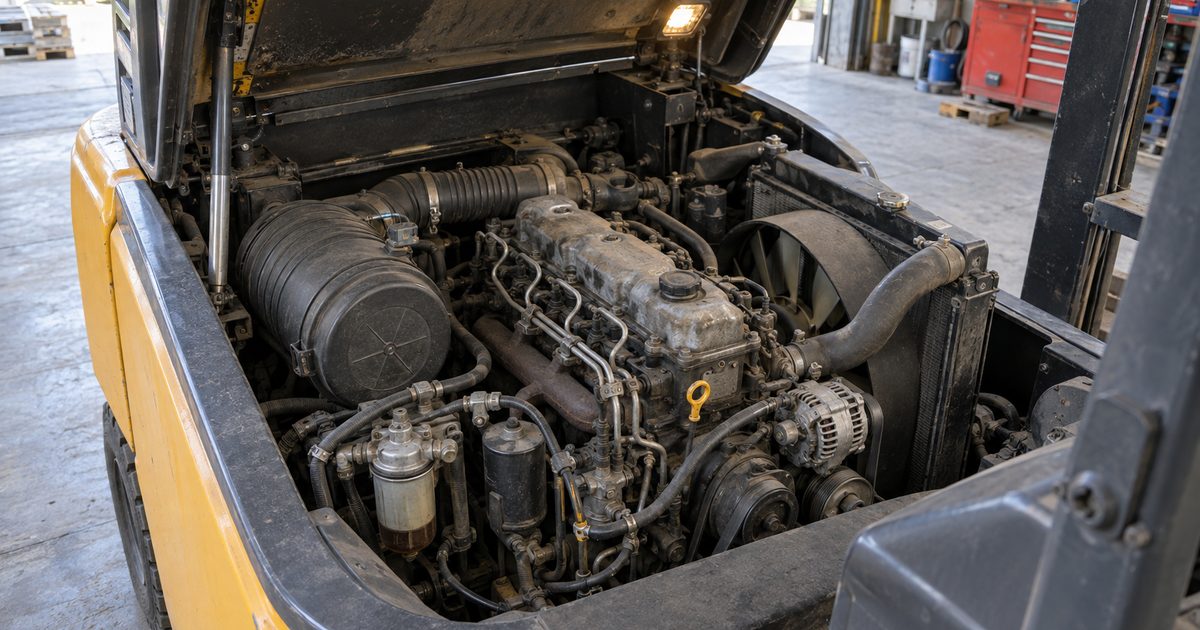
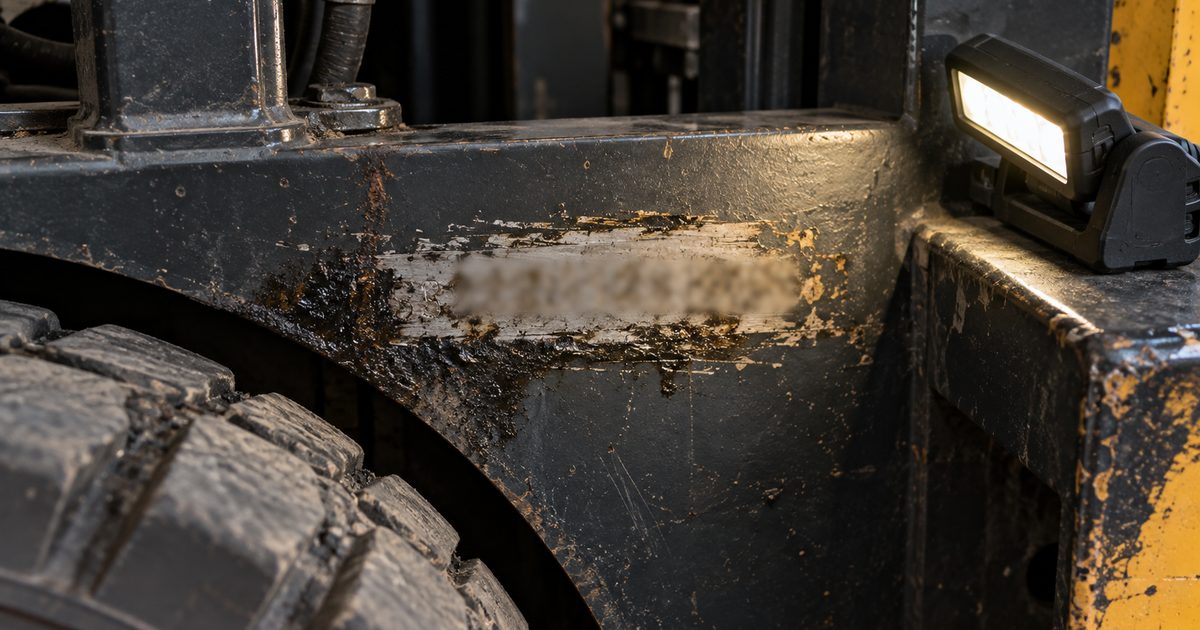
  • The engine plate: photographed on the block, so you know whether it is a Yanmar, a Nissan or a Komatsu unit before you price a part.
  • The hour meter: photographed with the key on, and again at the end of a video so the two readings agree.
  • A cold start on video: how long it cranks, the colour of the smoke, whether it settles to a steady idle.
  • The transmission: forward and reverse under load, watching for a delay before it bites, or engine speed rising without the truck moving.
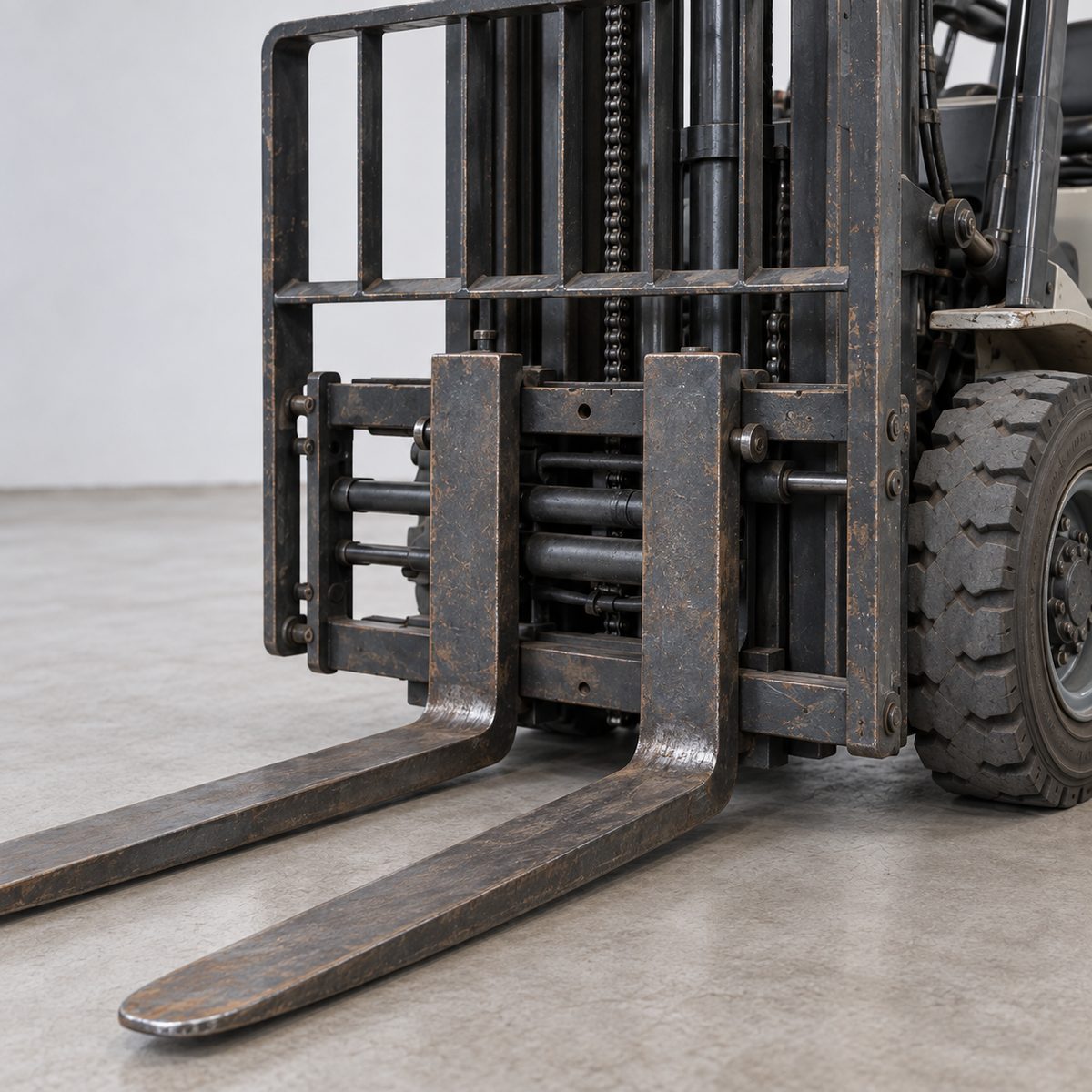
  • Mast, chains, rams and forks: a full lift and lower on video, watching for a jerky stage change, uneven chains, drift when held up, wet rams and cracked fork heels.

On the year, be careful. Komatsu year letter tables circulate online and the ones we compared contradict each other, so we will not print one and nor should you trust one. The dash gives the design series, not the year. The full serial sent to a Komatsu dealer settles it, and on a machine built for Europe or the United Kingdom the year of construction should already be in the marking on the plate.

So ask the seller to photograph five things before any money moves: the whole data plate with every line readable, the engine plate, the hour meter with the key on, the serial stamped into the frame, and the mast at full height. Our forklift serial number year lookup shows what each tells you, the used forklift buying checklist is the full list, and if the seller is new to you read buying a forklift overseas safely first.

What we source and where we ship it

We do not sit on a yard of machines. You tell us the capacity, the mast height, the fuel and the port it is going to, we go and find the machine, we check it and photograph it, and we come back to you with one landed price to your port.

In Komatsu we look for diesel counterbalance from 1.5 to 3.5 tonnes in the FD range, petrol and LPG from 1.5 to 3.5 tonnes in the FG range, and battery electric from 1.5 to 3 tonnes in the FB range. Above that, 4 to 7 tonne heavy diesel for yard and timber work, and 10 to 16 tonne diesel for port and container handling, which is where a Komatsu is genuinely the machine to want. The heavy ones take longer to find, and we say so rather than promise a date we cannot keep.

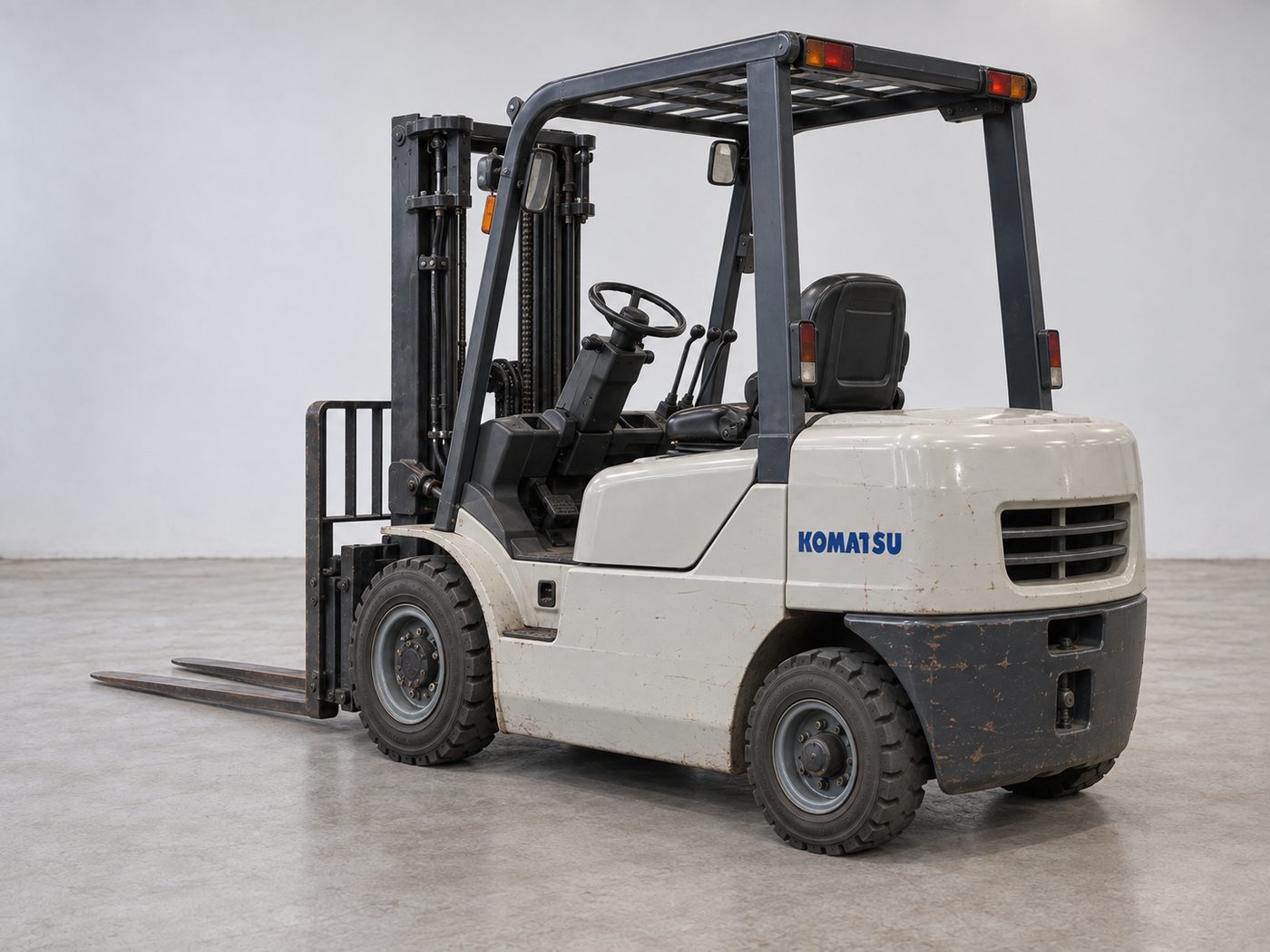
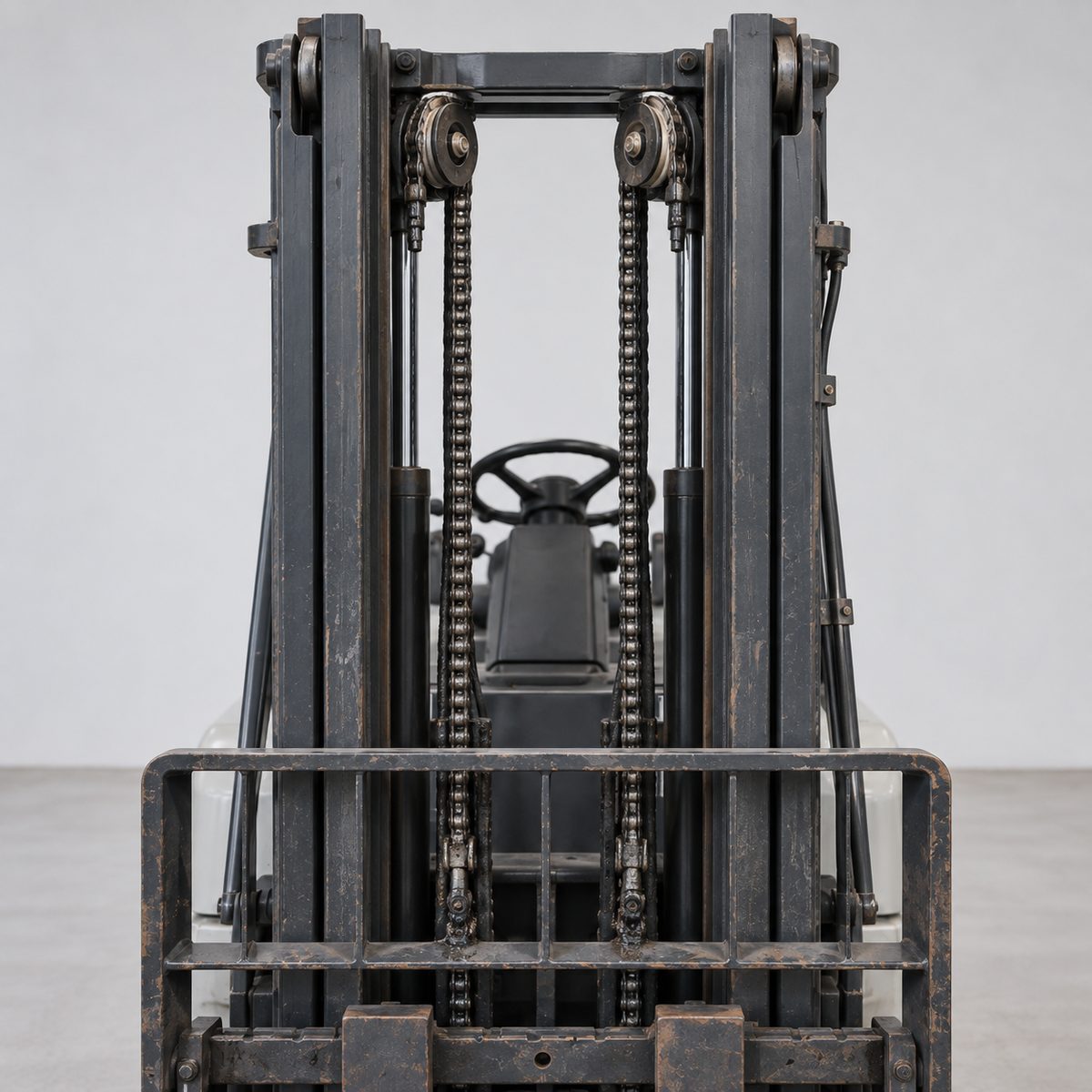
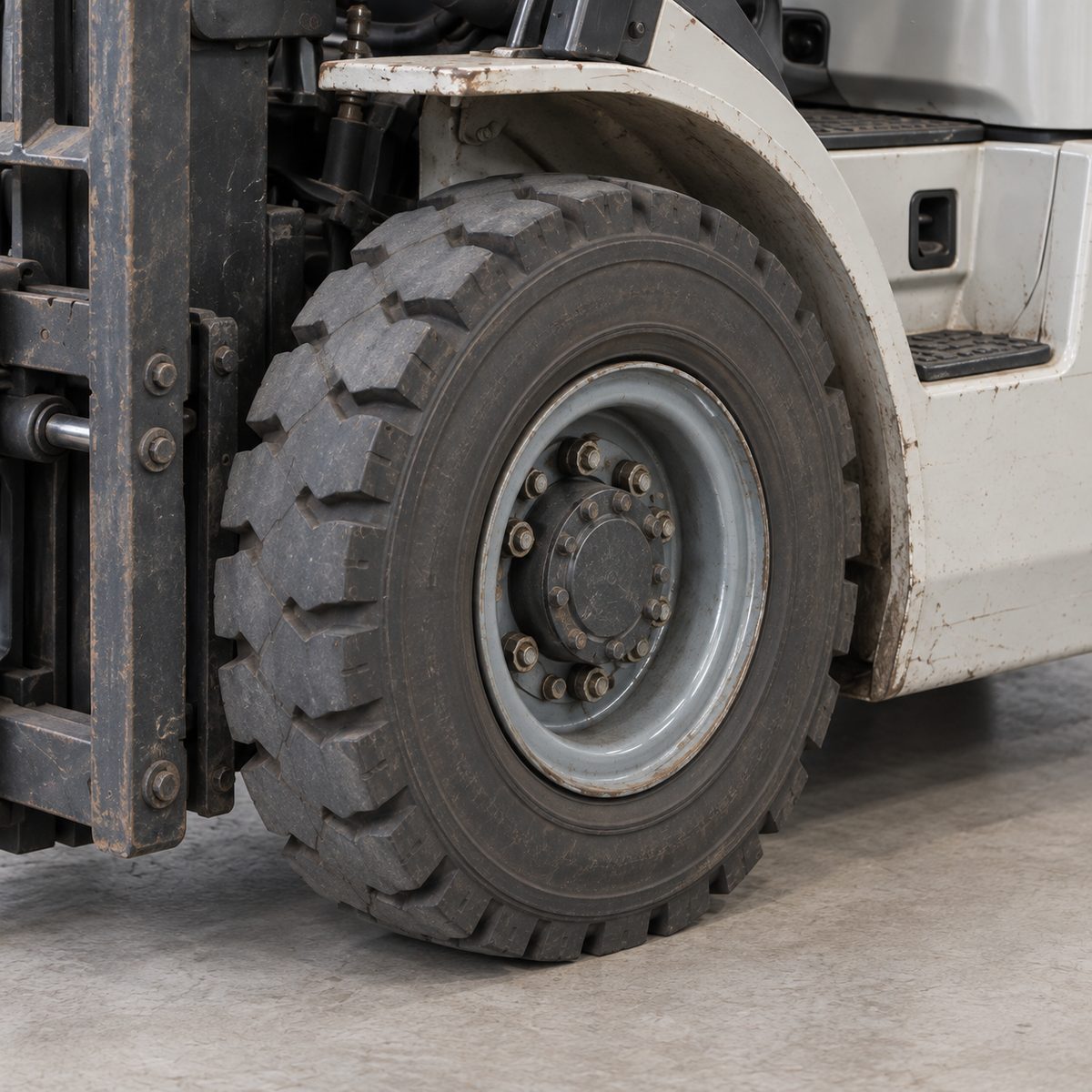
You will notice there is no photograph of a forklift on this page, and that is deliberate. There is no Komatsu in our picture library, and we will not put another brand's machine on a Komatsu page and hope you do not look closely. When we find your Komatsu we photograph that exact machine, the plates, the hour meter, the mast, the forks and the tyres, and you see those pictures before you pay.

Machines travel by container or by roll on roll off depending on size and route, and at 7 tonnes and above the weight usually makes that choice for you. Shipping a forklift in a container covers the physical side and forklift shipping cost worldwide covers the freight bill. If a Komatsu is not the right answer we will say so and point you at Toyota, Linde or the Chinese brands instead. Everything we deal in is on the forklifts for sale page, and the form below is the fastest way to start.

The Komatsu machines we source

Tell us which of these fits your work, or just tell us your loads and your site and we will point you at the right one.

  • 1.5 to 3.5 ton diesel counterbalance (FD)
  • 1.5 to 3.5 ton petrol and LPG (FG)
  • 1.5 to 3 ton battery electric counterbalance (FB)
  • 4 to 7 ton heavy diesel for yard and timber work
  • 10 to 16 ton diesel for port and container handling

What we check before it ships

Whatever brand you buy, this is the list we work through on the machine we source for you, and we photograph every one of them.

  • Hours on the meter We photograph the reading so you see the real number, not a claim.
  • Mast and chains Lifts smoothly, chains even and within wear limits.
  • Forks No cracks, heels not worn thin, both forks matched.
  • Tyres Tread left and any cracking, photographed straight.
  • Engine or battery Starts and runs clean, no leaks. Battery health tested on electric.
  • Hydraulics Lifts and holds without a slow drop.
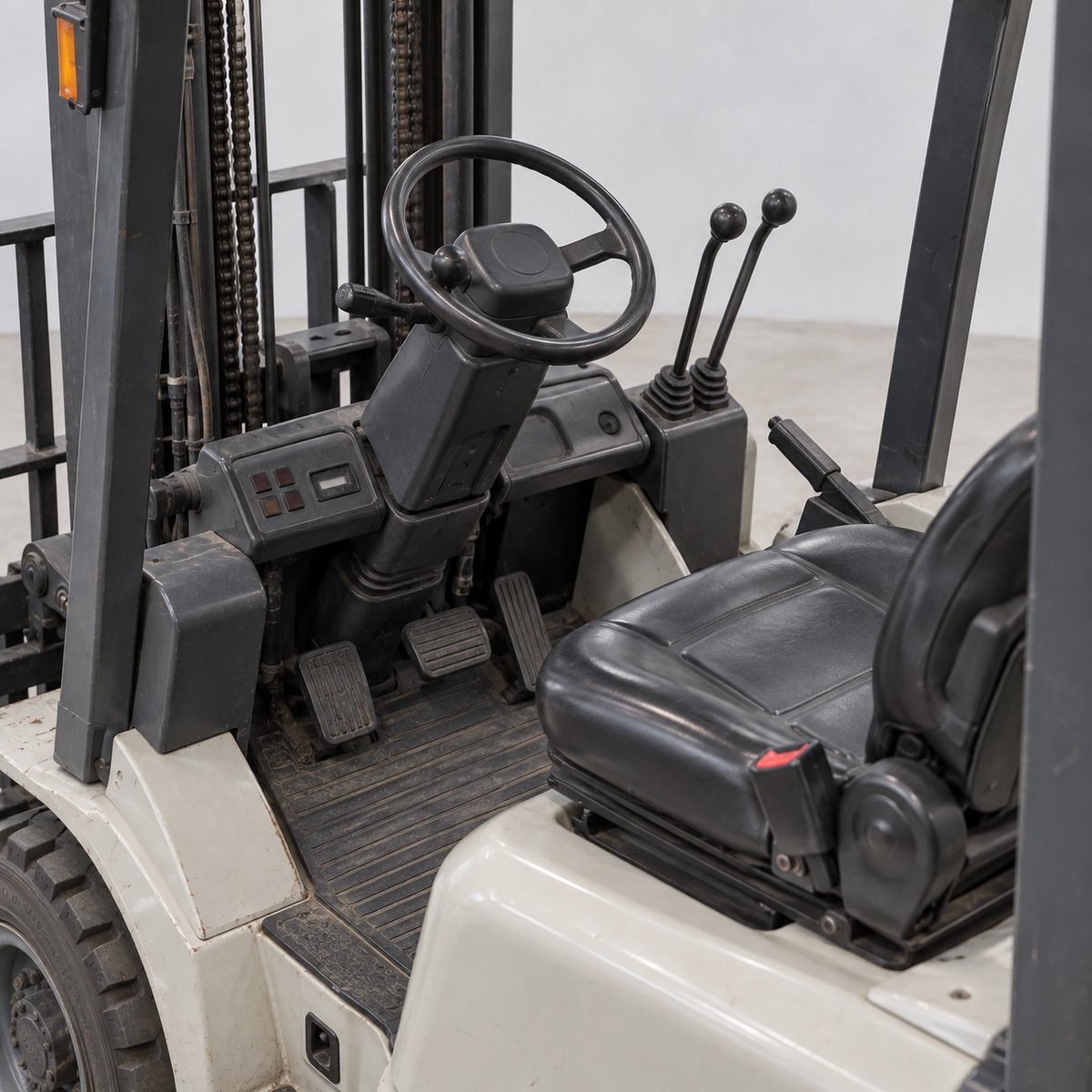
  • Cab and controls Seat, gauges and levers, shown exactly as they are.
  • Data plate and serial So you can check the year and the exact machine yourself.
No stock, no invented prices. We do not sit on a yard full of stock. You tell us the brand, the capacity and the fuel you need, we go and find that machine, and we send you real photos of the actual unit with its hours and its data plate before you decide anything.

Komatsu forklifts: common questions

Are Komatsu forklifts any good?

On outdoor diesel work, yes. Komatsu is a construction and mining company first, and its lift trucks are heavy, plain and mechanically simple, which is what you want a long way from a dealer. The weak points are forklift dealer coverage outside Japan and North America, a thinner used market than Toyota's, and an electric range that is not the reason anyone buys the brand.

What does FD30T-16 mean on a Komatsu forklift?

F is forklift, D is diesel, and 30 is capacity in hundreds of kilogrammes, so a nominal 3,000 kg. The T is read as the torque converter build and a C in that position as the clutch build, meaning a manual gearbox, though we could not source a Komatsu document setting out those letters, so confirm the build with the dealer. The -16 is the design series, which is the generation of the model and not the year. FG is petrol or LPG and FB is battery electric.

What engine is in a Komatsu forklift?

It depends on the size. Published sheets show a Yanmar 4D94LE on the FD30T-16, and Nissan K21 and K25 petrol and LPG units on the FG range. From 7 tonnes upward the trucks carry Komatsu's own construction engines, with an S6D102E on the FD70T-8 and an SAA6D107E-1 on the FD100-8 and FD160E-8. Ask for a photo of the engine plate before you order parts.

Does Komatsu still make forklifts?

Yes. Komatsu still lists forklifts as a current product line. What changed is visibility. Komatsu was seventh on the Modern Materials Handling world lift truck ranking up to 2013, thirteenth on the 2024 list, and was dropped from the 2025 list because it no longer reports its lift truck revenue separately. That is a ranking dropping a company, not a company leaving a business.

Komatsu or Toyota, which should I buy?

On a 2 to 3 tonne truck doing ordinary work, Toyota, because parts, dealers and resale are all easier. Komatsu gets stronger as the machine gets heavier and as you get further from a material handling dealer, especially where Komatsu excavators are already common, because the heavy forklifts share their engines with those machines.

Can you find a Komatsu in the size I need?

Tell us the capacity, the mast height, the fuel, whether it has to work inside a container, and the port it is going to. We go and look for machines that match, send you photos of the actual unit with its plates and its hours, and quote you a landed price. You decide from there.

Guides worth reading first

Enquire

Ask us for a Komatsu forklift

Tell us the capacity, the fuel and your nearest port. We go and find the machine, send you real photos of it, and quote the landed price.

Other brands we source

See every brand →

WhatsApp Us