Are Linde forklifts worth it? An honest buyer's guide
A Linde drives differently from every other forklift, and one engineering choice explains it. There is no gearbox and no torque converter in a Linde counterbalance truck. The engine turns a pump, the pump drives a hydraulic motor at each drive wheel, and that is the whole driveline.
So the answer to are Linde forklifts worth it has little to do with the badge. It comes down to one question about your own country. Can you get a hydraulics man to this machine when it needs one? Here is that drive explained, and the parts bill that comes with it.
What a Linde forklift looks like
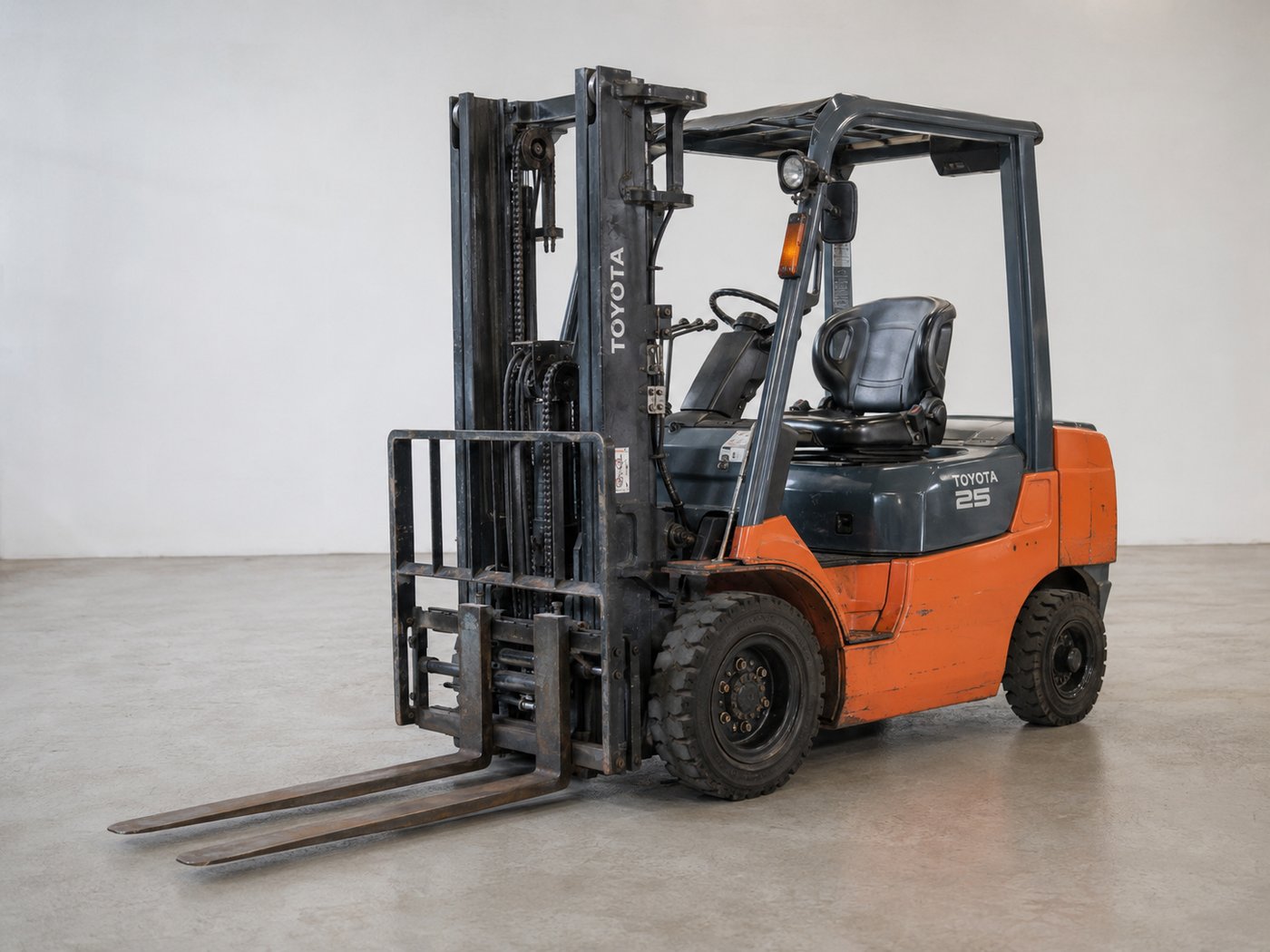
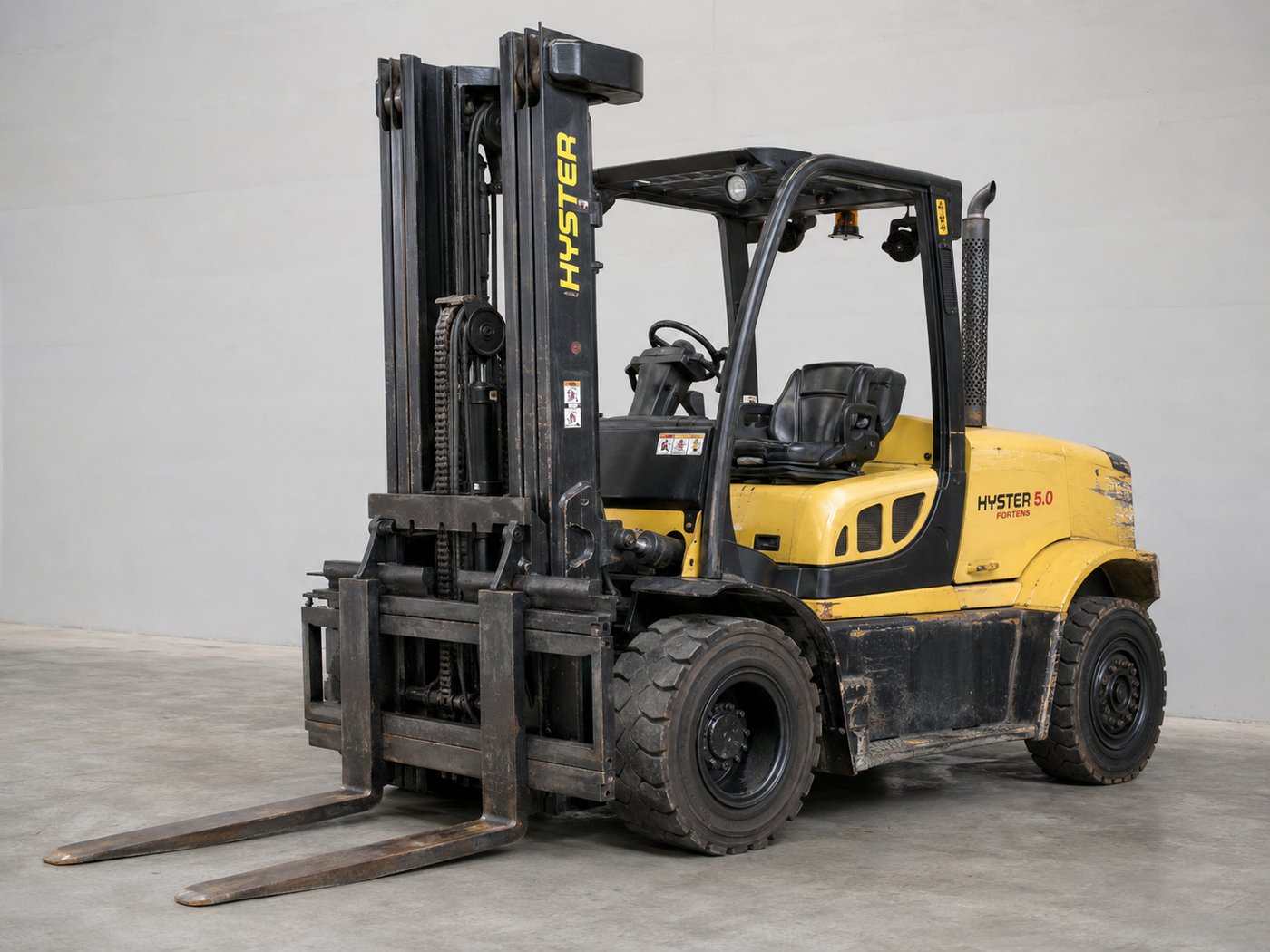
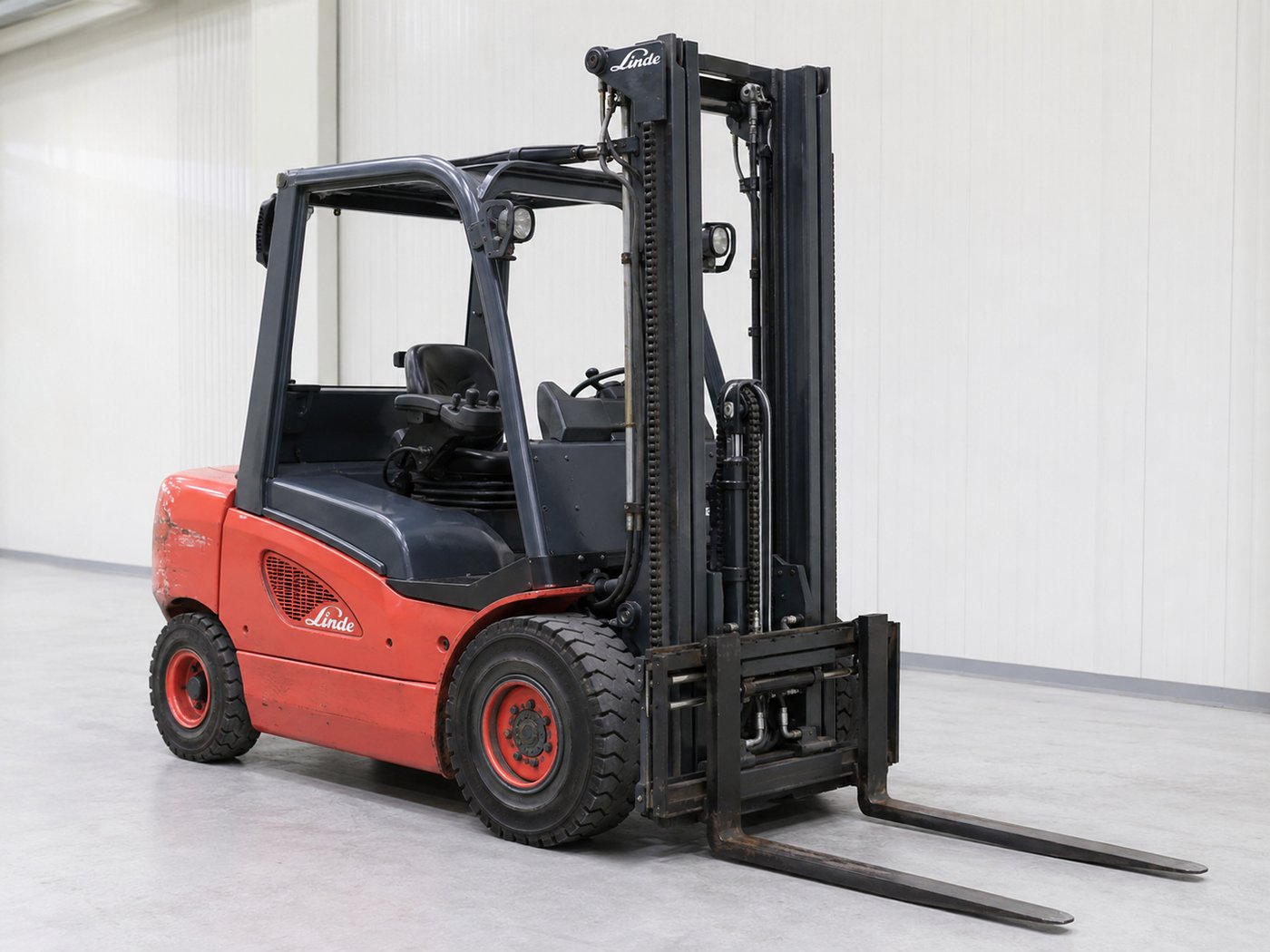
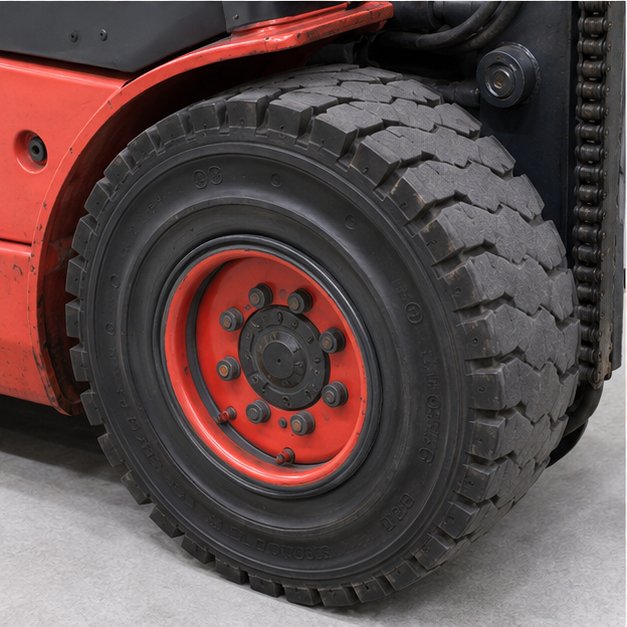
These show the type of machine we source in this brand. They are not photos of a unit we are holding. When we find your machine you get real photos of that exact one.
What hydrostatic drive is, and why Linde drivers love it
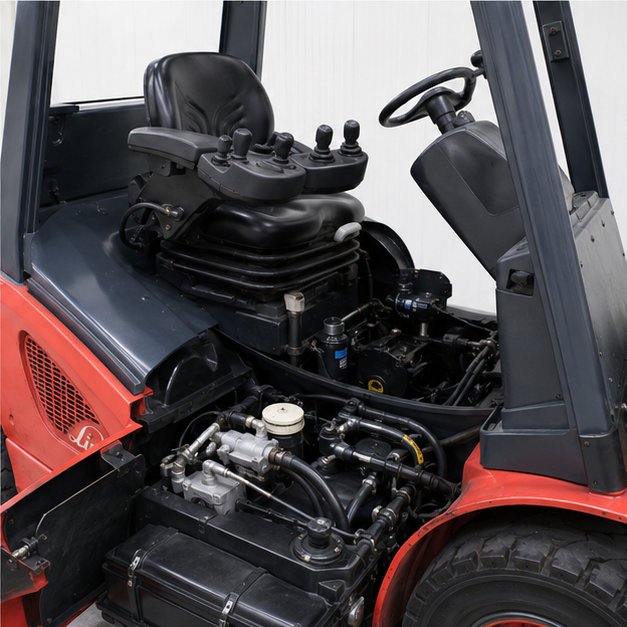
Hydrostatic drive replaces the gearbox with oil. The engine spins a variable displacement pump, the pump sends oil to a hydraulic motor at each drive wheel, and that motor turns the wheel. No torque converter, no gearbox, no clutch and no mechanical differential anywhere in the truck.
Inside the pump sits a swashplate. Press the forward pedal and the plate tilts, oil flows, and the truck moves. Tilt it a little for a creep, tilt it further for full speed. The other pedal tilts the plate the other way, so the oil runs backwards and so does the machine. Linde calls it dual pedal control, with no gear lever and no inching pedal.
Lift your foot and the flow falls away, so the truck slows itself to a standstill. An operator can shuttle in and out of a container all day without a shift lever and with barely a touch of the brake. Because the drive does the stopping, a used Linde often has plenty of brake left at hours that would have finished a conventional truck. The oil also splits evenly between the two wheel motors, so it corners without a differential.
Are Linde forklifts worth it?
Yes where you can get one serviced, and no where you cannot. A Linde earns its money on long shifts and constant direction changes, because the drive keeps the operator moving instead of shifting. It gives that money straight back in a town where nobody can open a hydrostatic drive unit.
Linde Material Handling is German, based at Aschaffenburg and part of the KION Group alongside STILL and Baoli. It is not the industrial gases company of the same name, which parted from it in 2006. The European used pool is deep.
If your lifting is a few hours a week, you are paying for engineering you will never use, and a Toyota or one of the Chinese brands will do the job for less. Our guide to the best forklift brands in the world puts Linde in the premium group, and this page is the fine print.
Why Linde parts cost more than everyone else's
Because the parts that hurt are Linde's own design. A hydrostatic pump and a pair of wheel motors are not commodity items you can shop between three suppliers, the way you can shop a torque converter for a Japanese truck. That work goes to the dealer or a hydraulics workshop.
Ordinary wear items are fine. Filters, seals, hoses, forks, chains, tyres and brake parts all have a working aftermarket. Routine costs are normal and the rare failure is expensive.
Distance is the other half. Most Linde parts move out of Europe, so a buyer in Africa, the Gulf or South Asia pays freight and waits while the truck stands.
Dealer support outside Europe is real, and it moves. Linde currently lists the Bisedge group as its dealer for sub Saharan Africa, with offices in South Africa, Nigeria and Tanzania. Good inside those borders, no help next door, so check your own country on Linde's own dealer search before you buy.
Linde H series and E series, and the 391 to 396 type numbers
The badge gives you the fuel and the capacity. The three digit type number gives the parts man what he actually needs. H is an engine truck, E is electric, the number is capacity in hundreds of kilos, and the letter after it is the fuel.
Linde rates its smaller trucks at a 500 mm load centre, the European convention, while American trucks are usually rated at 24 inches. On the heavier machines it commonly rates at 600 mm instead, and where it does the badge says so, as in H50/600. Treat the capacities below as typical and confirm them on the data plate.
| Type number | Models it covers | What it is (typical) |
|---|---|---|
| 391 | H14, H16, H18, H20 | Engine truck, 1.4 to 2.0 t |
| 392 | H20, H25 | Engine truck, 2.0 to 2.5 t |
| 393 | H25, H30, H35 | Engine truck, 2.5 to 3.5 t |
| 394 | H40, H45, H50 | Engine truck, 4.0 to 5.0 t |
| 396 | H50, H60, H70, H80 | Engine truck, 5.0 to 8.0 t |
| 386 | E12 up to E20 | Electric, 1.2 to 2.0 t |
| 387 | E20, E25, E30, E35 | Electric, 2.0 to 3.5 t |
| 1202 | H20 up to H35 | Current range, 2.0 to 3.5 t |
The same badge lives in two families, since H20 appears in 391 and 392, H25 in 392 and 393, and H50 in 394 and 396, so the badge alone will not get you the right part. Quote the type number and the serial from the plate. Our forklift model number decoder covers the other brands, and the serial number year lookup dates it.
Is a cheap, high hours Linde a trap?
It is a trap when the drive unit is worn and a bargain when it is not, and you can usually hear the difference in five minutes. Everything else on the machine follows normal used forklift rules.
Listen to it cold, then again after twenty minutes of work. A healthy drive gives a smooth rising whine that tracks the pedal. Knocking, a whine that keeps climbing after the truck stops accelerating, a pause before it pulls away, or creep with both pedals up all point at the pump or the motors.
Then read the book. Linde quotes a long drive and hydraulic oil interval, commonly around 6,000 hours, so past that point you want proof it was done with the right oil, confirmed against the manual for that build. Buy the history, not the hour meter, and see how many hours is too many.
Linde vs Toyota on what it costs to own
A Linde usually costs less per hour where a dealer exists and more per hour where one does not. Toyota wins on parts everywhere and on resale outside Europe. Linde wins on operator output, brake and tyre wear, and precision.
| What you are comparing | Linde H series | Toyota engine trucks |
|---|---|---|
| Driveline | Pump and a hydraulic motor at each drive wheel | Engine, torque converter, transmission, differential |
| Who repairs the driveline | Hydraulics specialist or dealer | Most forklift mechanics, most countries |
| Parts you can buy locally | Wear parts yes, drive units mostly not | Genuine and copy parts almost everywhere |
| Resale outside Europe | Narrower pool of buyers | The deepest pool of any brand |
| Best fit | Heavy hours with support in reach | Anywhere, especially where support is thin |
So ask one question first. Who fixes this in your town? If it is a workshop that already services Linde hydraulics, take the Linde. If it is a mechanic who has only ever opened Toyota and Komatsu gearboxes, buy the Japanese truck. That is arithmetic about downtime, not a comment on quality.
What to check before you buy a used Linde
Check the drive first and everything else second. On most brands the mast and the engine decide the deal. On a Linde the hydrostatic drive is the deal. The rest is the same as on any used forklift.
- Data plate: a clear photo showing the type number, the model and the full serial.
- The drive, cold and hot: knocking, rising whine, hesitation, or creep with both pedals released.
- Both pedals: forward and reverse feeling the same, and a smooth self stop.
- Oil and records: clean hydraulic oil, no milky look, and a book showing the last drive oil change.
- Engine plate: Linde has used engines from more than one supplier over the years, Volkswagen industrial diesels among them, so photograph the plate rather than assume. See forklift engines explained.
- Mast, tyres and hours: smooth lift with no drift, drive wheels checked for chunking, hour meter photographed while it runs.
The full brand independent list is our used forklift buying checklist. If the machine sits in another country, read buying a forklift overseas safely before you send anybody money.
What we source and where we ship it
We do not sit on a yard of Linde trucks. You tell us the family, the capacity, the mast and the fuel, we go and find the machine, and you see real photos of that actual unit before you commit.
In Linde we can source H series diesel and LPG from 2.0 to 3.5 tonnes, the heavier H40 to H80 diesel range from 4 to 8 tonnes, and E series electric from about 1.6 to 3.5 tonnes. Container work needs a low collapsed mast, so tell us the door height you load through. For heavy port work look at Hyster too.
Then we quote it landed. Tell us your port and we come back with the machine, the freight and an estimate of your duty, so you see a real total. Our guide to what it costs to ship a forklift worldwide explains that number, and our forklifts for sale page shows how sourcing runs. Send us the spec and we will start looking.
The Linde machines we source
Tell us which of these fits your work, or just tell us your loads and your site and we will point you at the right one.
- 2.0 to 3.5 ton Linde H series diesel
- 2.0 to 3.5 ton Linde H series LPG
- 4 to 8 ton Linde H series diesel
- 1.6 to 3.5 ton Linde E series electric
What we check before it ships
Whatever brand you buy, this is the list we work through on the machine we source for you, and we photograph every one of them.
- Hours on the meter We photograph the reading so you see the real number, not a claim.
- Mast and chains Lifts smoothly, chains even and within wear limits.
- Forks No cracks, heels not worn thin, both forks matched.
- Tyres Tread left and any cracking, photographed straight.
- Engine or battery Starts and runs clean, no leaks. Battery health tested on electric.
- Hydraulics Lifts and holds without a slow drop.
- Cab and controls Seat, gauges and levers, shown exactly as they are.
- Data plate and serial So you can check the year and the exact machine yourself.
Linde forklifts: common questions
Are Linde forklifts worth it?
They are worth it if you work them hard and can get hydraulic work done locally, because the drive keeps an operator productive and the brakes and tyres last well. They are not worth it for light duty work, or for a location with no hydraulics support, where a Japanese truck is the safer buy.
What does hydrostatic drive mean on a forklift?
It means the engine drives a pump instead of a gearbox. The pump sends oil to a hydraulic motor at each drive wheel, so there is no torque converter, no gearbox, no clutch and no differential. Lifting off the pedal cuts the oil flow, which is how the truck slows itself down.
Why are Linde parts so expensive?
The costly parts are Linde's own hydrostatic pump and drive motors, which have no commodity equivalent, so they come through the dealer or a specialist workshop. Wear items like filters, seals, chains and tyres are ordinary. Most Linde parts also travel from Europe, which adds freight and waiting time.
What does H30D mean on a Linde forklift?
H is a counterbalance truck with a combustion engine, 30 is the rated capacity in hundreds of kilos, so 3,000 kg, and D is diesel, where T would be LPG. The three digit type number on the data plate, such as 393, is what parts suppliers actually need.
Is Linde better than Toyota?
Linde is better to drive and easier on brakes and tyres. Toyota is easier to keep running almost anywhere and holds its value better outside Europe. Pick Linde where support exists and the hours are heavy, and Toyota where support is thin.
Can you still get parts for an old Linde H series?
Yes for the common families. The 391 to 396 engine trucks and the 386 and 387 electrics are well documented and widely supported in Europe. Always quote the type number and serial from the data plate, because the same badge appears in more than one family.